



Fill out the form below and a Cypress Creek representative will be in touch with you about your pest control needs.
BLOG
Wasps vs. Bees: How to Tell the Difference and Stay Safe
You hear a buzz near your ear. Something yellow and black lands on your drink. Your instinct kicks in—but should you swat, stay still, or slowly back away?
Most people treat wasps and bees as the same threat. They’re not. These insects look similar, behave differently, and require very different responses. Misidentifying one can mean unnecessary panic—or worse, escalating a situation that didn’t need to be escalated.
This guide breaks down the key differences between wasps and bees, explains how each one behaves, and gives you practical advice for staying safe around both.
Why the Confusion Exists
It’s easy to see why people mix them up. Both wasps and bees are flying insects with yellow-and-black markings, and both can sting. They often appear in similar environments—gardens, parks, patios, and outdoor dining areas.
But biologically, they’re quite distinct. Bees belong to the superfamily Apoidea and are closely related to ants. Wasps fall under the suborder Apocrita and encompass thousands of species, including yellowjackets and hornets. The resemblance is largely a matter of convergent evolution—both insects developed warning coloration to signal that they’re not worth messing with.
Understanding the difference starts with looking more closely at their physical features, behaviors, and habitats.
Physical Differences: What to Look For
Body Shape and Build
This is the fastest way to tell them apart. Wasps have a distinctly narrow waist—a thin segment called a petiole—connecting their thorax and abdomen. Their bodies look sleek, almost angular.
Bees, by contrast, are rounder and more robust. Honeybees and bumblebees have a stockier build with a less pronounced waist. If you can get a safe look, the shape of the body is usually the clearest indicator.
Hair and Texture
Bees are hairy. That fuzziness isn’t just for looks—it’s how they collect and transport pollen. Their body hair traps pollen grains as they move from flower to flower.
Wasps are smooth and shiny. They have very little hair, which is one reason they’re not effective pollinators. Their surface has a glossy appearance that’s noticeably different up close.
Leg Appearance in Flight
When bees fly, their hind legs often appear round and swollen—this is the pollen basket (corbiculae) in action. Wasps keep their legs tucked in close during flight and don’t carry pollen in the same way.
Color Patterns
Both insects use yellow and black, but the distribution differs. Wasps tend to have brighter, more vivid yellow bands with sharp contrast. Bee coloring is often more muted, sometimes appearing more amber or golden, especially in honeybees.
Behavioral Differences: How They Act
Aggression Levels
Here’s where the safety implications get real. Wasps are generally more aggressive than bees, particularly when they feel their nest is threatened. Yellowjackets, a common type of wasp, are especially known for unprovoked aggression around food and garbage.
Bees are comparatively docile. A honeybee foraging on a flower is focused on one thing: collecting pollen and nectar. Disturbing her is unlikely unless you’re physically interfering with her or the hive.
Stinging Behavior
A key distinction: honeybees can only sting once. Their barbed stinger lodges in skin and tears away from the bee’s abdomen when it tries to pull free—a fatal injury for the bee. This is why bees don’t sting unless they feel it’s their last resort.
Wasps, on the other hand, can sting multiple times. Their smooth stingers don’t get stuck. This makes them more dangerous in confrontational situations, particularly if you disturb a nest.
Bumblebees can also sting multiple times, but they’re typically very non-aggressive and rarely do so unless directly handled.
Diet
Wasps are omnivores. They eat other insects, but they’re also drawn to sugary foods—which is why they hover around your soda can at a summer barbecue. Late summer and autumn are when wasps are most bothersome, as their colonies wind down and workers forage more aggressively for sugar.
Bees are strict herbivores. Their diet is entirely plant-based: pollen for protein, nectar for energy. They have no interest in your lunch.
Nesting Habits: Where Each One Lives
Wasp Nests
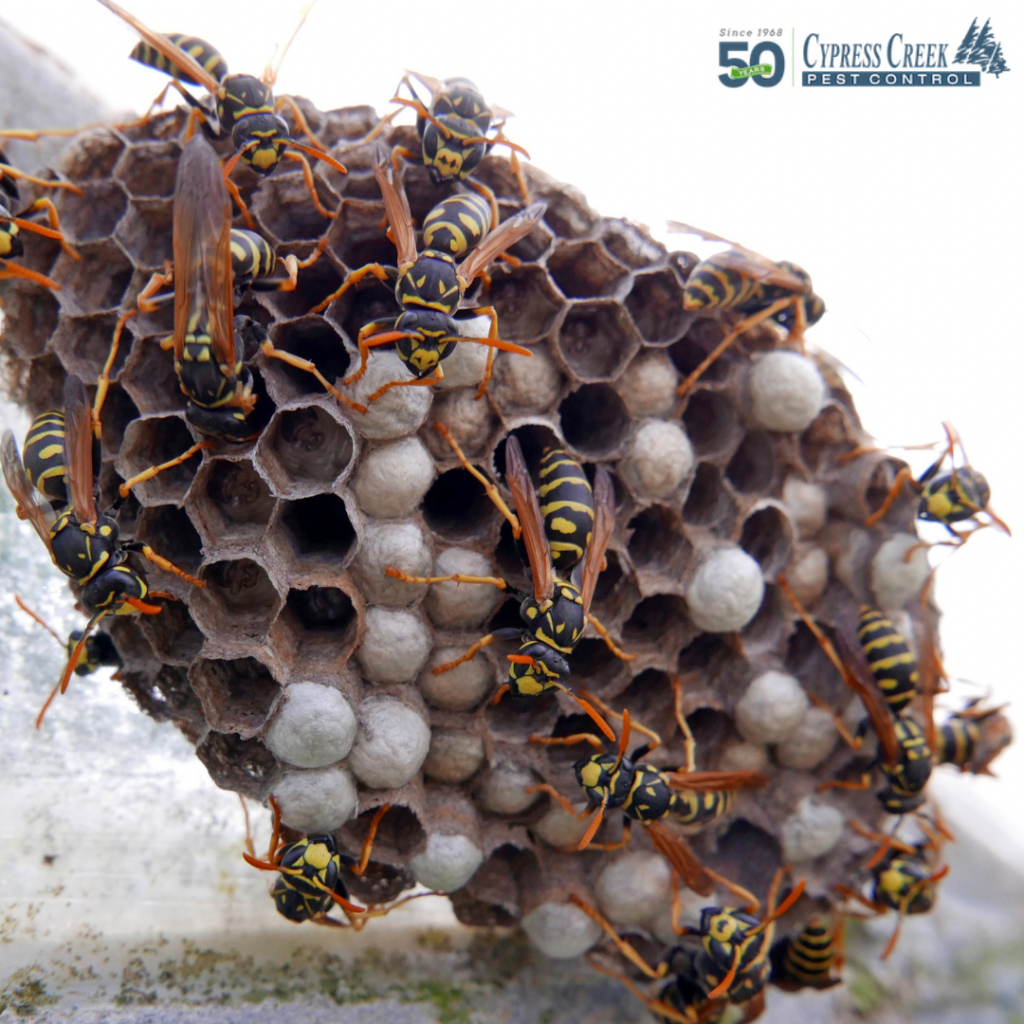
Wasps build paper-like nests from chewed wood fibers mixed with saliva. These nests can appear in a wide range of locations: underground burrows, inside wall cavities, under roof eaves, or hanging from tree branches.
Yellowjacket nests underground are particularly hazardous because they’re easy to accidentally step on or disturb with a lawn mower. Aerial wasp nests—the classic papery gray globe you might spot hanging from a tree—are easier to spot and avoid.
Bee Nests
Honeybees build wax combs inside enclosed spaces—hollow trees, wall cavities, and managed hive boxes. Their nests are perennial, surviving year after year with the same colony.
Bumblebees nest in small underground colonies, often in abandoned rodent burrows or under garden debris. Their colonies are much smaller than honeybee hives—usually a few hundred individuals rather than tens of thousands.
Solitary bee species, like mason bees and mining bees, don’t form colonies at all. They nest individually in small holes in wood or soil and are essentially harmless to humans.
How to Stay Safe Around Both
Don’t Swat
Sudden movements and swatting are among the most effective ways to trigger a sting. If a wasp or bee lands on you, stay calm. Gently and slowly move your arm or shake the insect off. Fast, jerky movements signal a threat.
Keep Food and Drinks Covered Outdoors
Wasps are strongly attracted to sugary drinks, meat, and rotting fruit. When eating outside, keep food covered and check canned drinks before taking a sip—wasps can climb inside.
Wear Subdued Colors
Bright floral patterns and colors can attract bees, which associate them with flowers. Wearing plain, neutral clothing outdoors reduces the chance of unwanted attention, particularly in areas with high bee activity.
Avoid Strong Scents
Heavy perfumes, scented sunscreen, and fragrant hair products can attract both bees and wasps. Keep scents light when spending time outdoors.
Seal Entry Points at Home
Inspect your home each season for gaps around window frames, roof eaves, and vents. These are common entry points for nesting wasps. Sealing them early prevents colonies from establishing inside wall cavities, where removal becomes much more complicated.
Never Block a Nest Entrance
Blocking the entrance to an active nest traps the colony inside—and they will find another way out, often through interior walls. If you’ve found a nest, don’t interfere with it yourself. Call a professional pest controller.
When to Call a Professional
If you find a wasp nest near a high-traffic area, inside your home, or underground in a yard where children play, professional pest control removal is the safest option. Attempting to remove a wasp nest without proper protective equipment is dangerous.
What to Do If You’re Stung
For most people, a sting causes temporary pain, redness, and swelling. Here’s what to do:
- Bee stings: Remove the stinger as quickly as possible by scraping it sideways with a fingernail or card. Don’t squeeze it, as this releases more venom. Apply a cold pack to reduce swelling.
- Wasp stings: There’s no stinger to remove. Clean the area, apply a cold pack, and take an over-the-counter antihistamine if needed.
If the person stung shows signs of anaphylaxis—difficulty breathing, swelling of the throat, dizziness, or a rapid drop in blood pressure—call emergency services immediately. This is a medical emergency. People who know they have a severe allergy should carry an epinephrine auto-injector (EpiPen) at all times during warmer months.
The Takeaway: Look Before You React
The next time something buzzes past you, take a breath. A fuzzy, round insect on a flower is almost certainly a bee doing its job. A sleek, narrow-waisted insect hovering near your food is more likely a wasp.
Neither requires a panicked response. Move calmly, avoid threatening the insect, and keep your environment tidy to reduce unnecessary encounters. If you do find a nest, assess the risk, and contact a professional before taking any action.
With a little knowledge, what once felt like a threat becomes something much easier to manage.
Google Rating
Based on 2510 reviews
Copyright © 2026 Cypress Creek Pest Control. All Rights Reserved.
Pest Control Marketing By Mktg4TheFuture