




Fill out the form below and a Cypress Creek representative will be in touch with you about your pest control needs.
BLOG
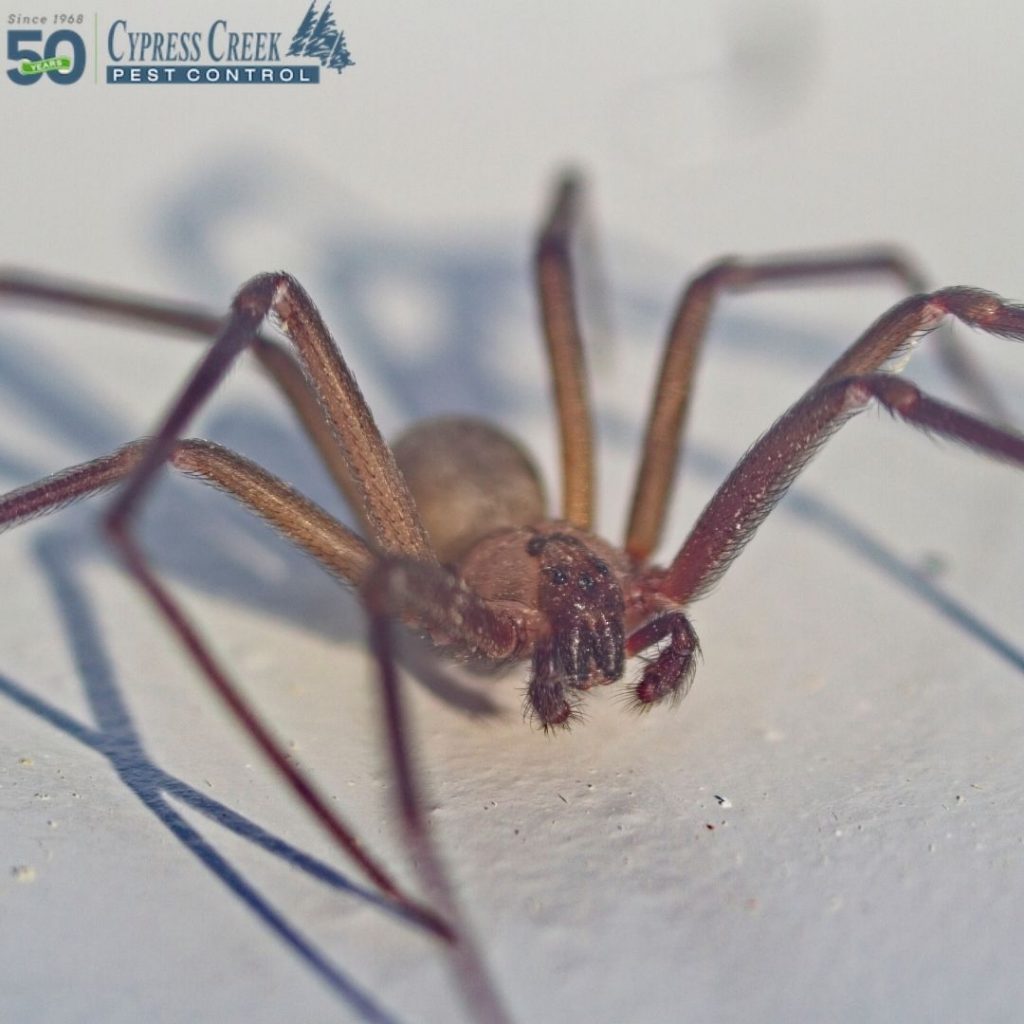
Do Spiders Come Inside for Warmth? Debunking the Winter Myth
As the days grow shorter and the temperature drops, a familiar pattern emerges in households across the country. You reach for a sweater, turn up the thermostat, and suddenly notice an eight-legged guest scuttling across the living room floor.
It is a logical assumption to make. You are cold, so the wildlife outside must be cold too. It seems perfectly natural that a spider would seek the cozy, climate-controlled environment of your home to escape the freezing outdoors. This belief has persisted for generations, leading many kind-hearted homeowners to “rescue” spiders from the cold or, conversely, leading arachnophobes to seal their windows in terror of a mass invasion.
However, biology tells a different story. The idea that spiders migrate indoors to stay warm is largely a myth. While it makes sense from a human perspective, spiders do not experience the world the way mammals do. Understanding why they are actually in your house requires a closer look at spider anatomy, behavior, and the distinct difference between indoor and outdoor species.
The Cold-Blooded Reality
To understand why spiders don’t seek warmth, you first have to understand how they regulate their body temperature. Unlike humans, dogs, or cats, spiders are “poikilotherms,” commonly known as cold-blooded creatures. They do not generate their own body heat.
For a mammal, maintaining a specific internal temperature is a matter of life and death. If you get too cold, you shiver to generate heat. If you stay cold for too long, hypothermia sets in. Spiders function differently. Their body temperature fluctuates with their surroundings. They don’t feel “cold” in the sense of discomfort or pain.
How Spiders Survive the Freeze
Outdoor spiders have evolved over millions of years to survive harsh winters without central heating. As autumn approaches, these arachnids undergo a physiological change. They begin to build up cryoprotectants—essentially natural antifreeze—in their tissues. These compounds, often glycerol or glycol, lower the freezing point of the spider’s bodily fluids.
This chemical adaptation allows them to survive in temperatures well below freezing. They enter a state of dormancy called diapause. In this state, they tuck themselves into leaf litter, under tree bark, or into rock crevices and simply wait for spring. They are perfectly adapted to the cold. In fact, bringing an outdoor spider inside “to warm it up” can be fatal. The sudden temperature shock and the lack of humidity in a heated home can cause them to desiccate (dry out) and die.
The Tale of Two Spiders: Indoor vs. Outdoor
Another major reason the “coming inside for warmth” theory fails is that most spiders you see indoors were never outside to begin with.
Arachnologists (scientists who study spiders) generally categorize these creatures into two distinct groups regarding their habitat: outdoor species and synanthropes (house spiders).
The House Spider
The spiders you spot in the corner of your ceiling or trapped in the bathtub are likely Steatoda, Pholcus (daddy longlegs), or Tegenaria (house spiders). These species originate from warmer climates and have adapted over centuries to live alongside humans. They are not visiting; they are residents.
Generations of these spiders have lived, bred, and died within the walls of buildings. They have little to no tolerance for outdoor conditions. If you catch a house spider and put it outside in the winter to “set it free,” you are almost certainly sentencing it to death. It lacks the “antifreeze” adaptation of its outdoor cousins.
The Outdoor Spider
Conversely, outdoor spiders—like the garden orb weaver—are rarely found inside. If they are, it is usually accidental. They may have wandered in through an open door or hitched a ride on firewood. Once inside, they are usually unhappy. Our homes are too dry and lack the specific food sources they require. They aren’t looking for heat; they are looking for a way out.
So, Why Do I See More Spiders in the Fall?
If they aren’t coming in for the heat, why does there seem to be a population explosion in your living room every September and October? The timing is coincidental to the weather, but driven by biology.
The Search for Love
The primary reason for increased sightings is mating season. For many spider species, late summer and early autumn mark the time when males reach sexual maturity.
Most of the year, spiders are reclusive. They stay in their webs or hideaways waiting for food. However, once a male matures, he abandons his web and goes on the prowl for a female. He is not looking for a radiator; he is looking for a mate. This wandering behavior takes them across your floors, up your walls, and out into the open where they are easily spotted.
They Were Always There
The second reason is simply size. The spiders that hatched in the spring have spent months eating and growing in the quiet, dark corners of your home (basements, attics, behind furniture). By autumn, they have reached their maximum size. A spider you might not have noticed in May is impossible to miss in October. They haven’t just arrived; they’ve just become visible.
Identifying Your Guests
Knowing which spider you are looking at can help confirm that they are not outdoor invaders. Here are a few common house guests:
- The Cellar Spider (Daddy Longlegs): Known for their spindly legs and habit of vibrating in their webs when disturbed. They are permanent indoor residents.
- The American House Spider: These create the messy cobwebs often found in corners. They are harmless and effective pest controllers.
- The Jumping Spider: Occasionally an outdoor visitor, but often found around windowsills hunting flies. They are easily recognized by their jerky movements and large, forward-facing eyes.
How to Discourage Spiders (If You Must)
Even knowing they aren’t invading for warmth, you might prefer not to share your space. Because they aren’t seeking heat, turning down the thermostat won’t help. Instead, focus on their actual needs: food and shelter.
Seal the Entry Points
While most house spiders are born inside, “accidental” tourists like wolf spiders can wander in through gaps. Inspect your home’s foundation. clear away vegetation from the perimeter, and ensure weather stripping on doors and windows is tight.
Reduce the Food Source
Spiders are predators. They only hang around if there is something to eat. If you have a lot of spiders, you likely have a lot of insects.
- Turn off outdoor porch lights, which attract moths and flies (and the spiders that eat them).
- Keep your kitchen clean to avoid attracting ants and fruit flies.
- Address moisture issues in basements, as dampness attracts silverfish and centipedes—prime spider food.
Declutter
Spiders require hiding spots. Piles of clothes, cardboard boxes, and cluttered storage areas provide the perfect environment for a spider to set up a home base. Keeping floors clear makes the environment less hospitable for them.
Frequently Asked Questions
Do spiders hibernate in my house?
Not exactly. While outdoor spiders enter a dormant state called diapause, indoor spiders usually stay active year-round as long as there is food. However, if prey becomes scarce in the winter, their metabolism may slow down, and they may become less active until spring brings more bugs.
Is it true spiders crawl into people’s mouths while they sleep?
This is one of the most persistent myths in history. Spiders have no interest in humans. We are massive, noisy, and breathe heavily. To a spider, a sleeping human is a terrifying landscape of vibrations and carbon dioxide. They actively avoid us.
Can I put a house spider outside?
It is generally not recommended. As mentioned earlier, true house spiders have adapted to stable indoor temperatures. Putting them out in the freezing cold is usually a death sentence. If you can’t stand them, move them to a garage or shed where they have some shelter, rather than placing them directly in the snow.
How long do house spiders live?
Most common house spiders live for about one to two years. However, some species, specifically certain females, can live for several years if they are in a safe environment with plenty of food.
Google Rating
Based on 2509 reviews
Copyright © 2026 Cypress Creek Pest Control. All Rights Reserved.
Pest Control Marketing By Mktg4TheFuture